
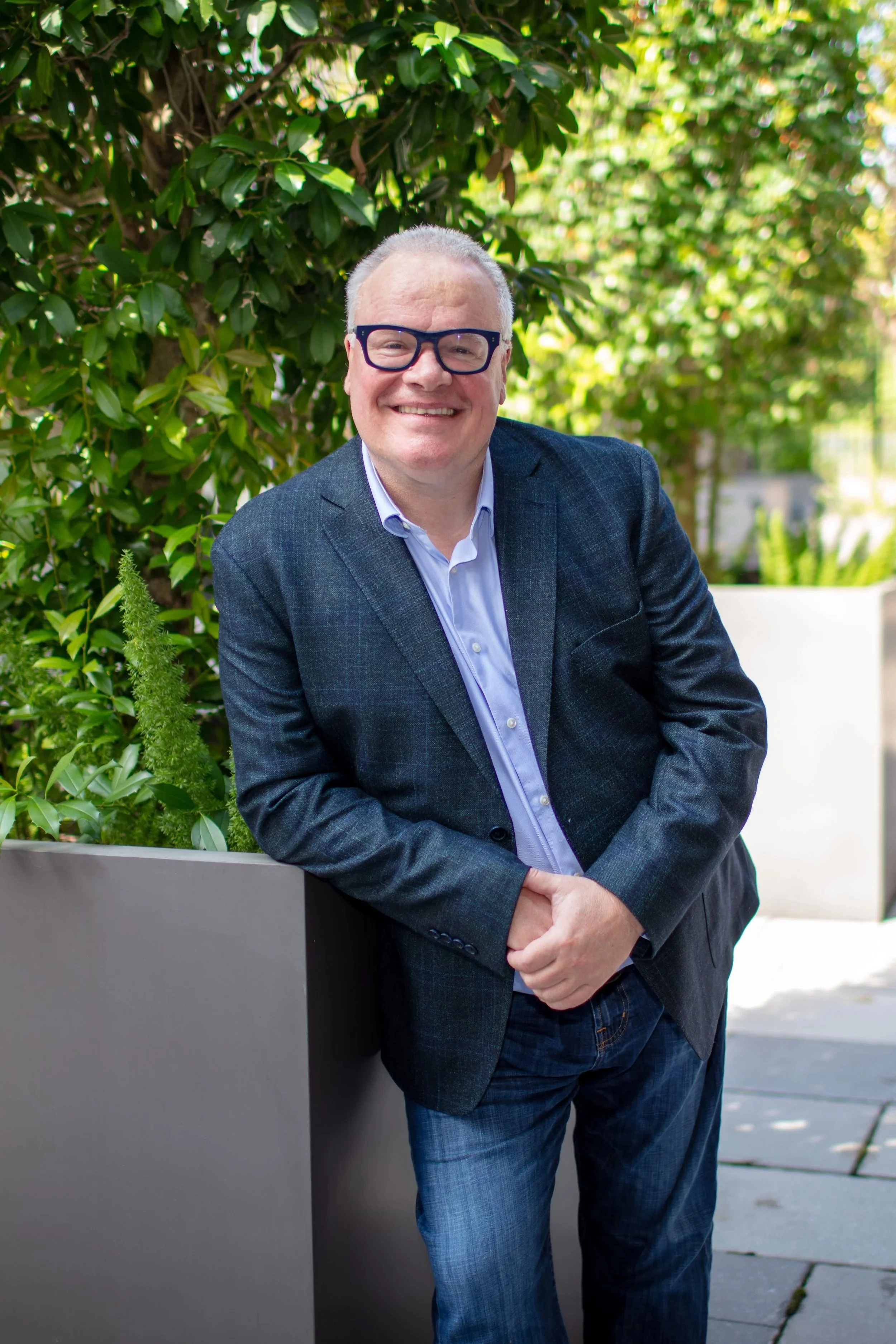
ABOUT KLAUS
I am Klaus Krøyer Madsen, a population health strategist based in Texas. For nearly twenty years I have done one kind of work in many forms: getting the settings where people actually live their lives, schools, clinics, congregations, workplaces, county agencies, to push in the same direction on purpose, so that good programs add up instead of cancelling out.
The Danish Thread
I grew up in Denmark and have lived in the United States for about thirty years. That combination explains more about my work than any credential. I come from a country where health is understood as something a whole society produces together, and I have spent my career in a country where health is mostly treated as something institutions deliver one program at a time. The gap between those two ideas is where I work.
It is also why the supersetting approach, developed by Paul Bloch and colleagues at the Steno Diabetes Center Copenhagen, fit my practice like a glove when it was published in 2014. I had been building that kind of coordination in Texas for years before it had a name, and I have worked in dialogue with Paul and his colleagues in the decade since. I hold an MPH from the UNC Gillings School of Global Public Health and a business degree from Copenhagen Business School, with two semesters as an MBA exchange student at The University of Texas at Austin, which is its own useful combination: public health goals, commercial discipline.
The Arc, Briefly
I led a CDC demonstration project on jail reentry in Dallas in 2007, coordinating the county jail, the safety-net hospital, housing, employment, schools, and law enforcement around one problem. I helped Corpus Christi and Nueces County build a $7 million county-wide childhood obesity system across more than 30 sites. In 2014 I founded the Houston program of Cities Changing Diabetes, now Cities for Better Health, as the third city in what became a global network of more than 50 cities, and designed the coalition model that cities across that network still reference. I replicated it in Philadelphia, advised its launch in Jakarta, and built Houston's FaithHealth work, where nine congregations across six faith traditions have written five-year health plans grounded in their own communities' data.
The full stories, with the numbers and the people who can vouch for them, are on the [Track Record] page. The thinking behind them is on [The Approach].
WHAT I BELIEVE
Three convictions run through everything I do:
Coordination is the mechanism. Not overhead, not administration. The Danish research proved it and I lived it in Dallas: when the coordinating function disappears, coordinated action collapses, even when every partner stays motivated. I tell every client this before we start.
Communities already know. The people closest to a problem understand it in ways no outside study fully captures. My job is to build the structures that let that knowledge set the agenda, not to arrive with answers.
Trust is infrastructure. It is slower to build than a program and more valuable than a grant, and it is the reason a pastor, a clinic director, a community based organization leader, and a county official will sit at the same table twice.
BEYOND THE WORK
I serve on the Board of Directors of BikeTexas, co-chair the Texas Diabetes Council's strategy workgroup, and sit on the Steering Committee of the Partnership for a Healthy Texas, a statewide obesity policy coalition I co-founded in 2006. I split my time between Austin and Houston. I still ride a bicycle the way Danes do, as transportation, and I cook more seriously than is strictly necessary.
If you are trying to make a collection of programs add up to something, [I would like to hear about it].